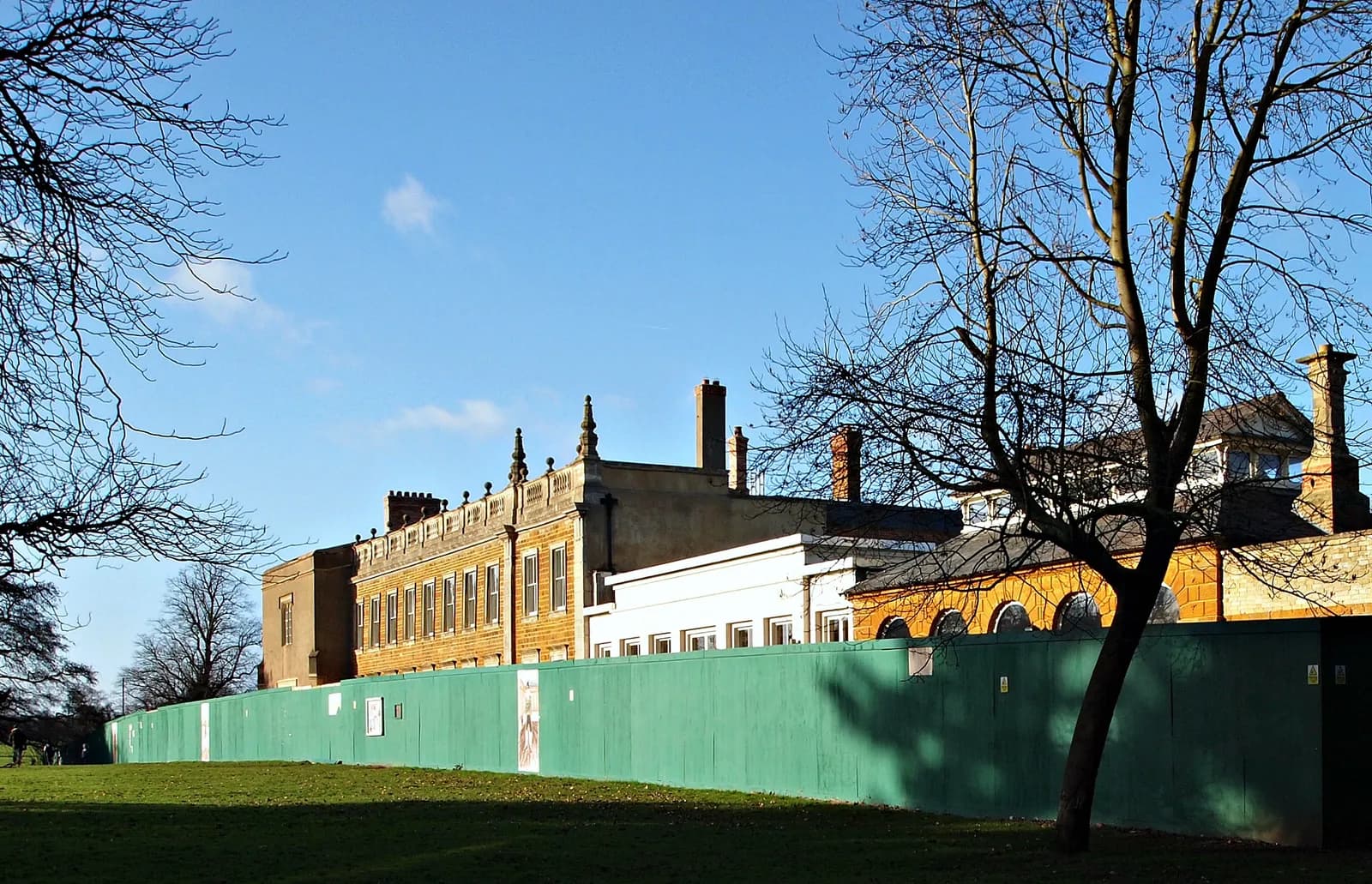
Delapré Abbey stands as one of Northampton's most significant heritage sites, its grounds witnessing both the solemn passage of a queen's funeral cortège and the violent capture of a king during civil war. The abbey's 900-year history intertwines with some of England's most dramatic medieval events.
The Cluniac Nunnery's Founding
The Abbey of St Mary de la Pré was established circa 1145 by Simon de Senlis, 4th Earl of Huntingdon and Northampton, during the reign of King Stephen. The Cluniac order of nuns who settled there made it one of only two such nunneries in England; the other was Arthington Priory in Yorkshire. The mother house was the famous Abbey of Cluny in Burgundy, France.
The abbey's full name, St Mary de la Pré, translates to "St Mary in the Meadow," reflecting its riverside location south of the River Nene. Over the centuries, the site benefited from royal patronage. Edward I donated the churches at Wollaston and Filgrave to the abbey, along with ten beams for church repairs in 1232 and five oaks for the refectory in 1258.
Eleanor of Castile's Final Journey
On 28 November 1290, Eleanor of Castile, Queen Consort of England, died at Harby in Nottinghamshire. Her body was embalmed at Lincoln Cathedral on 3 December 1290, where her viscera were buried. Her heart was taken to Blackfriars in London, whilst her body began the long journey to Westminster Abbey for burial on 17 December 1290.
The funeral cortège made overnight stops at twelve locations between Lincoln and London. Delapré Abbey provided shelter on the night of 8 December 1290. King Edward I, who had accompanied the procession from Lincoln, stayed at Northampton Castle that night.
Between 1291 and 1295, Edward I commissioned twelve Eleanor crosses to mark each resting place of his wife's funeral procession. The Hardingstone cross, standing within the grounds of Delapré Abbey, is one of only three surviving originals. Constructed between 1291 and 1292 by John of Battle, with statues by William of Ireland and Ralph of Chichester, the octagonal three-tiered cross cost over £100 to build.
The Battle of Northampton and the King's Capture
On 10 July 1460, the grounds north of Delapré Abbey became the site of a pivotal battle in the Wars of the Roses. The Yorkist army, led by Warwick, the Earl of March (the future Edward IV), and Baron Fauconberg, confronted Lancastrian forces commanded by Henry VI, the Duke of Buckingham, and the Earl of Shrewsbury.
This engagement marked the first documented use of artillery in England. The Yorkist forces prevailed, and King Henry VI was discovered in his tent by Warwick, March, and Fauconberg. The captured monarch was escorted to Delapré Abbey for the night as a prisoner.
The nuns of the abbey tended to the wounded from both sides of the conflict. Many of the battle dead are believed to have been buried in the nuns' graveyard, now the site's walled garden. The battlefield's historical significance has earned it Scheduled Monument status.
Dissolution and Transformation
The abbey surrendered to the Crown in 1538 during Henry VIII's dissolution of the monasteries. The estate passed through several private families over the following centuries: the Tate family held it from 1543 to 1756, followed by the Bouverie family from 1756 to 1943.
Northampton Corporation purchased the estate for £56,000 in 1946, transforming the private residence into public parkland. The house served as the Northamptonshire Record Office from 1959 to 2018.
Restoration and Public Opening
Following a Heritage Lottery Fund grant, a £6.3 million restoration project commenced in 2016. The abbey opened to the public on 17 March 2018 for the first time in its 900-year history. The Delapré Abbey Preservation Trust has managed the site since 2018.
Today, visitors can explore the Grade II* listed building and its surroundings. The estate encompasses 500 acres of parkland and eight acres of formal gardens, including the walled garden with sculptures by Walter Ritchie and Frank Dobson, rock and water gardens, a lake, and Delapré Woods. The Hardingstone Eleanor Cross remains a focal point within the grounds.
The house opens for general admission on Wednesdays, Thursdays, Sundays, and Bank Holiday Mondays from 11am to 4pm. The Orangery Café operates daily, whilst Hibiscus Fine Dining serves Thursday through Saturday. The venue hosts weddings, corporate events, and educational visits.